The faux olive tree is the houseplant for people who murder houseplants, a tall, silvery, Mediterranean-looking bit of greenery that never needs water, light, or talent. It's all over stylish corners online. But the eternal question with any fake plant is: does it look real, or painfully plastic? I bought a popular one and judged it up close and across the room.
The Order & Arrival
A tall, awkward item to ship, and it arrived adequately, boxed and protected, within the window, with the tree and a basic nursery pot inside. The branches were squashed flat from packing (normal and fixable), and nothing was broken. Not the most premium delivery, but the tree survived the journey fine.
First Impressions & Fluffing
Straight out of the box it looked fake, flattened, uniform, a bit sad. Don't judge it here. The crucial step is "fluffing": spending five or ten minutes bending and spreading every branch and leaf cluster into a natural, irregular shape. The transformation is dramatic, a flat plastic thing becomes a believably full, shaped little tree. This step is the difference between convincing and obviously fake.
How Real Does It Look?
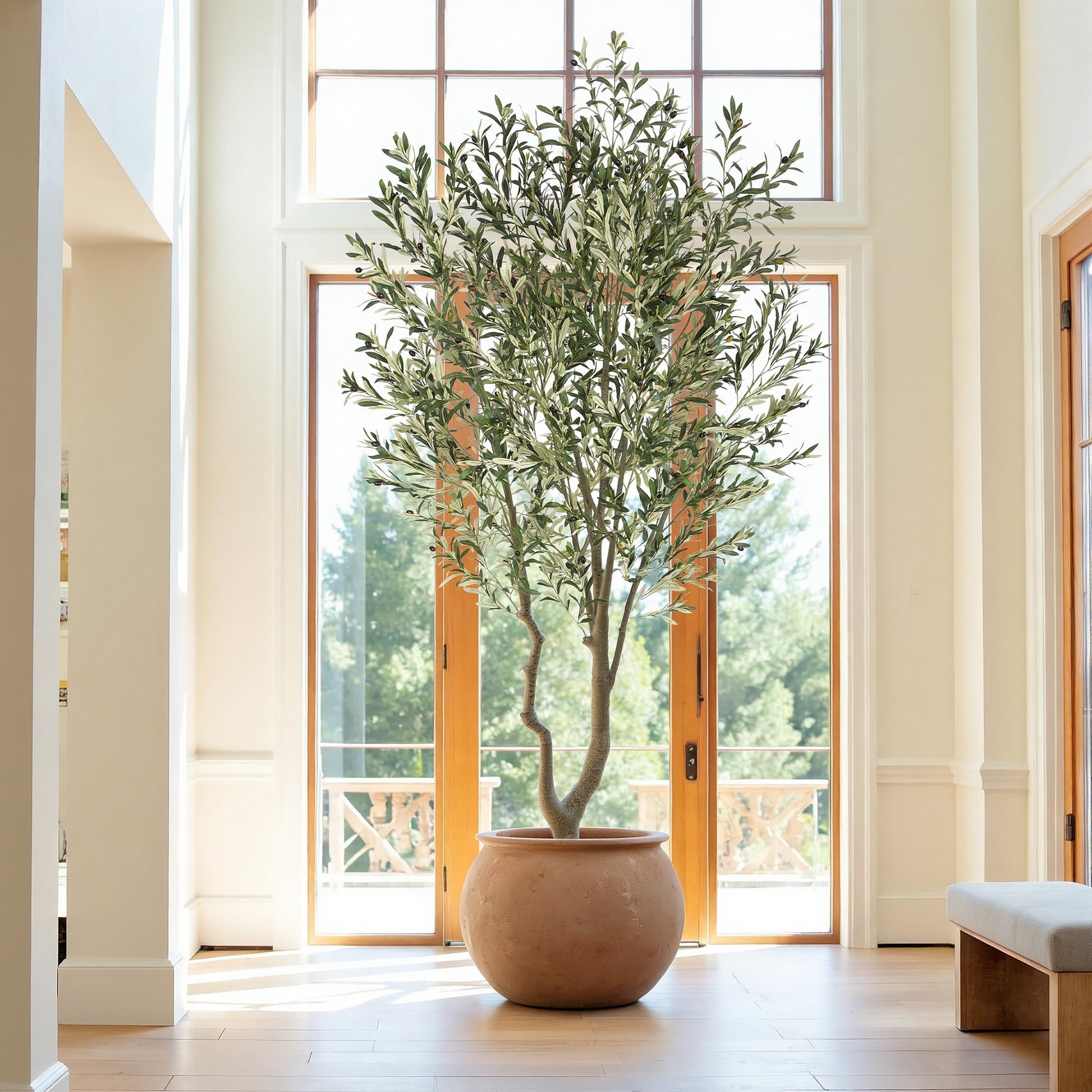
Once fluffed and potted nicely, it's genuinely convincing from a few steps back. The silvery-green olive leaves and shaped trunk read as real across a room, and it brings instant warmth and life to a corner. Up close, you can tell (the leaves are a touch too perfect), and if you put it right beside a real plant the contrast shows. But in its own corner, most visitors don't clock it until they touch it.
Living With It
This is the joy: it does nothing, forever. No watering, no light, no dropped leaves, no slow death. It just stays lush in a dark corner where no real plant would survive. I put mine in a spot far from any window that's defeated every living plant I've tried, and it's been a warm, green, unkillable anchor ever since. For a brown thumb, that's close to magic.
What's Good & What's Not
Good: convincing from a distance, zero care, perfect for low light, instant warmth and height. Not so good: it needs fluffing and a nicer pot to look its best, a quality one isn't cheap (a convincing 6-footer runs $120 to $200), and up close it can't fully fool you. Pop it in a real pot with some moss over the base and it looks far more expensive.
Who It's For
Anyone with a dark corner, a busy life, or a track record of killing plants who still wants greenery. Buy a quality one, fluff it properly, pot it nicely, and keep it away from real plants, do that and it's a brilliant, permanent, no-effort bit of life for a spot that would otherwise sit empty. For the right corner, it's a quiet winner.
A good faux olive tree looks genuinely convincing across a room, adds instant warmth to a corner, and never needs watering or light. Up close you can tell, and a quality one isn't cheap, but for a low-light corner or a brown-thumbed home, it's a brilliant, permanent bit of greenery.